THE MISSING CONNECTION
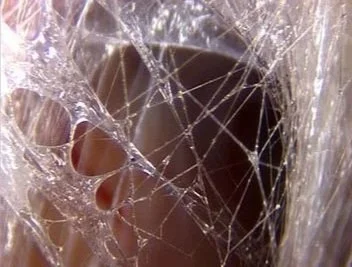
Fascia is the body's hidden network.
It surrounds every muscle, every organ, every bone, every nerve.
More than a connective tissue, fascia is the living system that gives the body its structure, transmits force, stores tension, and allows movement to flow throughout the entire body.
For decades, it was considered simply a wrapping tissue.
Today, science is revealing something very different.
Fascia is one of the body's largest sensory organs, deeply involved in posture, movement, recovery, breathing, and body awareness.
Yet most people have never heard about it.
1 in 2
Adults experience chronic musculoskeletal pain.
80%
Of modern lifestyles involve prolonged sitting and reduced movement.
Millions $$$
Are spent every year treating symptoms rather than addressing movement patterns.
The Body Adapts
Stress, inactivity, repetitive movement, poor breathing habits, and modern lifestyles gradually change the quality of our connective tissue.
The body responds.
The tissue adapts.
Movement changes.
What often appears as pain, stiffness, poor posture, reduced performance, or chronic tension may simply be the body's response to years of adaptation.
THE SCIENCE
Modern fascia research has transformed our understanding of the body.
i
Fascia is active tissue.
Research has shown that fascial tissue contains contractile cells capable of adapting to mechanical and biological stimuli.
ii
Hydration matters.
Healthy fascia depends on fluid movement between tissue layers, allowing structures to glide efficiently. Mechanical pressure and movement help in keeping the fascia healthy.
iii
Movement changes tissue.
Mechanical loading stimulates collagen remodeling and helps maintain resilience within the connective system.
iv
The body functions as one network.
Myofascial chains connect distant regions of the body, explaining how restrictions in one area may influence another.
MODERN LIFE. MODERN BODY.
Our bodies evolved for movement. Modern life asks us to remain still. Hours sitting. Screens. Stress. Shallow breathing. Reduced movement. Poor recovery. The body adapts to these conditions. Over time, these adaptations become our posture, our movement patterns, and often our pain.
Sitting
→ Reduced hip mobility
Screens
→ Forward head posture
Stress
→ Increased muscular tension
Shallow breathing
→ Restricted diaphragm
Lack of movement
→ Reduced tissue hydration
Poor recovery
→ Persistent stiffness
Sedentary habits
→ Loss of movement variability
WHEN FASCIA LOSES ADAPTABILITY
Morning stiffness
Persistent tension
Reduced mobility
Lower back discomfort
Neck and shoulder tightness
Joint restrictions
Poor posture
Movement fatigue
Breathing limitations
Loss of resilience
These are often signals, not isolated problems.
The body is communicating through tension.
THE FASCIA METHOD
The Fascia Method combines movement, breath, mobility, and fascial awareness to restore the body's natural capacity to adapt.
By working with the connective network rather than isolated muscles, we create space, improve movement quality, and support long-term resilience.
Because the body was not designed to move in parts.
It was designed to move as one connected system.
Quietly, the body remembers.
Movement returns.
Breath deepens.
Structure reorganizes.
And the intelligence of the body emerges again.
The body is not made of just muscles.
It is one connected living system.